In the 1990s, FUBU was perhaps one of the most iconic and successful urban streetwear brands, redefining what representation looked like in fashion at the time. At its peak in the late 1990s, the brand generated over $350 million in annual sales, quickly becoming a staple in hip-hop fashion, with celebrities such as LL Cool J, Nas, Busta Rhymes, Juvenile, and more donning the apparel. At a time when hip-hop was experiencing an explosion into the mainstream, FUBU’s bold and unapologetic designs resonated deeply. But FUBU, which means “For Us, By Us,” had a less extravagant birth, beginning with just $40, a borrowed sewing machine, and a passion.
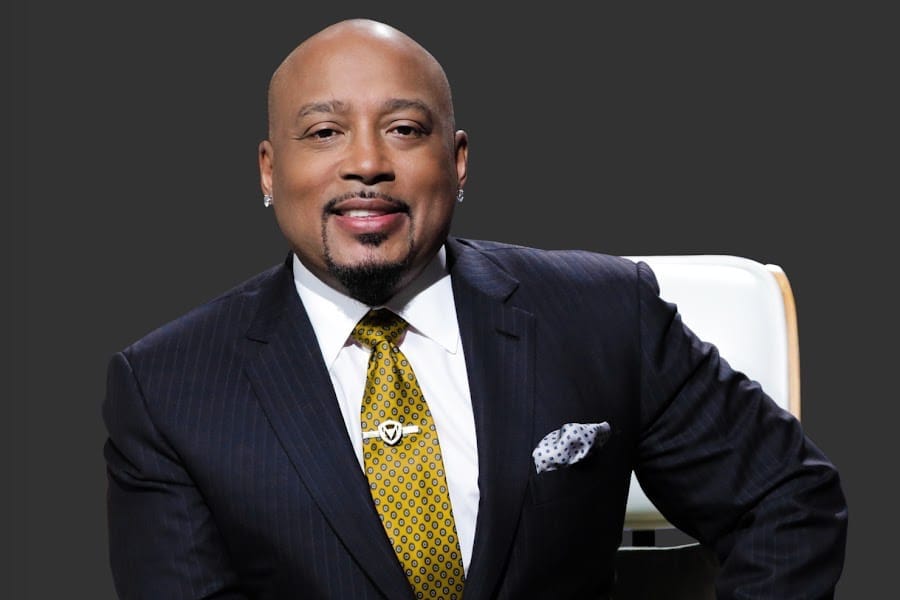
Long before he became a household name on Shark Tank, Daymond John was persuading his mother to mortgage their family home in Hollis, Queens, to help turn his dream for a clothing line into a reality. Born in Brooklyn in 1969 and raised in Queens, Daymond grew up alongside hip-hop. A young hustler, he was selling pencils, handing out flyers, and waiting on tables at Red Lobster, all while building a brand that would influence the culture.
Taught how to sew by his mom, Daymond turned his home into his first workshop. He used a handful of sewing machines at home to produce hats that he would then sell on the street.
“I didn’t start with a leap, and I think that’s important to know. I started with $40…I bought some material and made a bunch of hats. I went out on the street to see if I could sell them. That’s not a leap. It was a small, affordable step.” - Daymond John, The Trucker
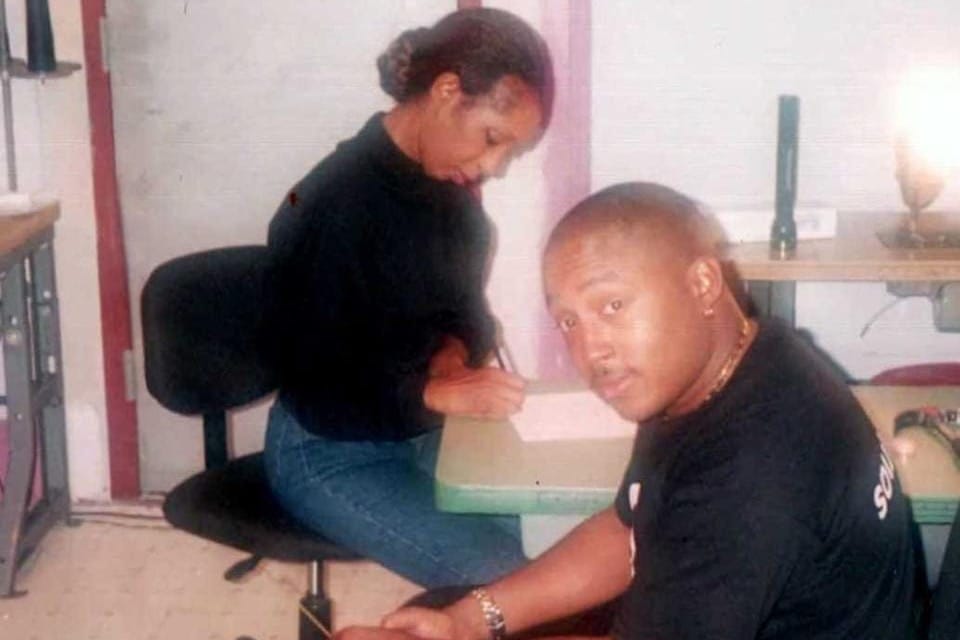
He later recruited the help of three childhood friends who helped the business take shape. But scaling the brand came with its challenges, such as getting a loan. Banks didn’t believe in his vision, rejecting him 27 times. That’s when his mother stepped in. Already believing in his potential, she became his first investor. She took out an equity line on their home in Queens, securing $100,000 for Daymond. With that money, he was able to set up a mini factory in the house.
At a time when many mainstream brands overlooked the hip-hop community, with some even explicitly dissociating themselves from hip-hop, FUBU was able to establish itself as a cultural staple.
A huge moment came for the brand when LL Cool J, Daymond’s neighborhood friend, began wearing the brand in music videos and advertisements. One of the most well-known moments came when LL Cool J was seen wearing it in a national Gap commercial, where he was outfitted in a pair of Gap jeans and a shirt. During the commercial, he says directly to the camera, “For Us, By Us.” When kids started searching for FUBU products in Gap stores, Gap pulled the commercial. But they soon realized its impact, as it helped Gap reach its intended audience, and reportedly expand its market by 300 percent.
By 1995, he signed a contract with Samsung, and within 5 years of that partnership, their sales reached $200 million. As he says, if you don’t know how to do something, find someone who does. Samsung’s guidance and direction facilitated his global expansion. Shortly after, FUBU landed a licensing deal with the NBA, creating a clothing line called FUBU NBA.
Though the brand ultimately shifted to international markets in the early 2000s, it relaunched in the U.S. in 2020, positioning it as a new opportunity to introduce the brand to a younger demographic. In 2022, the brand celebrated its 30th anniversary by collaborating with Black Fashion Fair, reimagining iconic pieces from its 1990s archives.
Today, Daymond operates a marketing agency called the Shark Group and a co-working space Blueprint and Co. With over $6 billion in product sales worldwide, he continues to be one of the celebrity investors on Shark Tank. While FUBU itself appears to have less visibility today, it has cemented itself as a pioneering brand that aligned unapologetically with hip-hop in the 1990s, proving that Black identity and culture should never be overlooked in any market. At its core, it embodied all that hip hop represents by turning nothing into something and empowering people to tell their own stories through a bold, self-defined, and authentic voice.