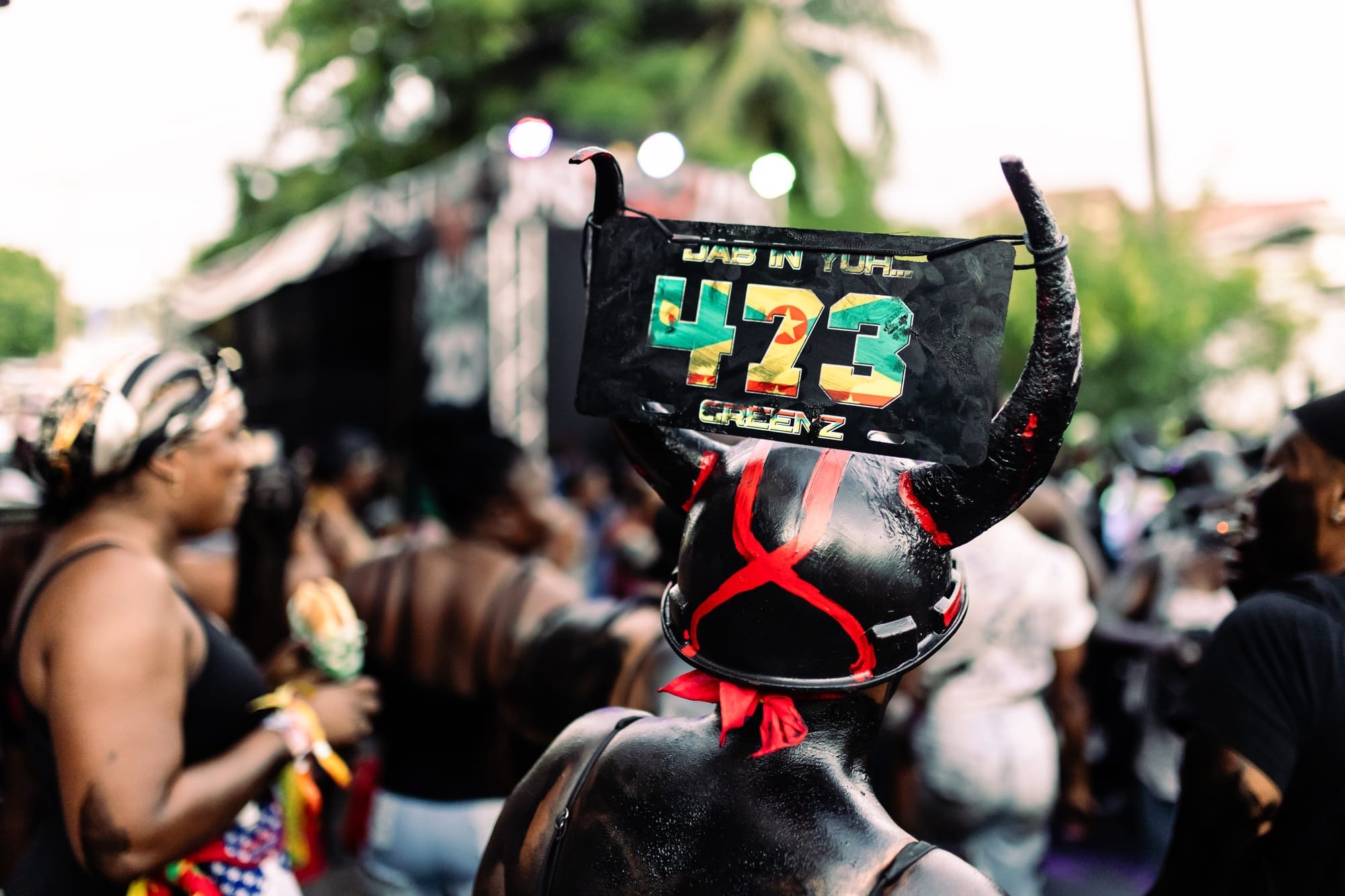
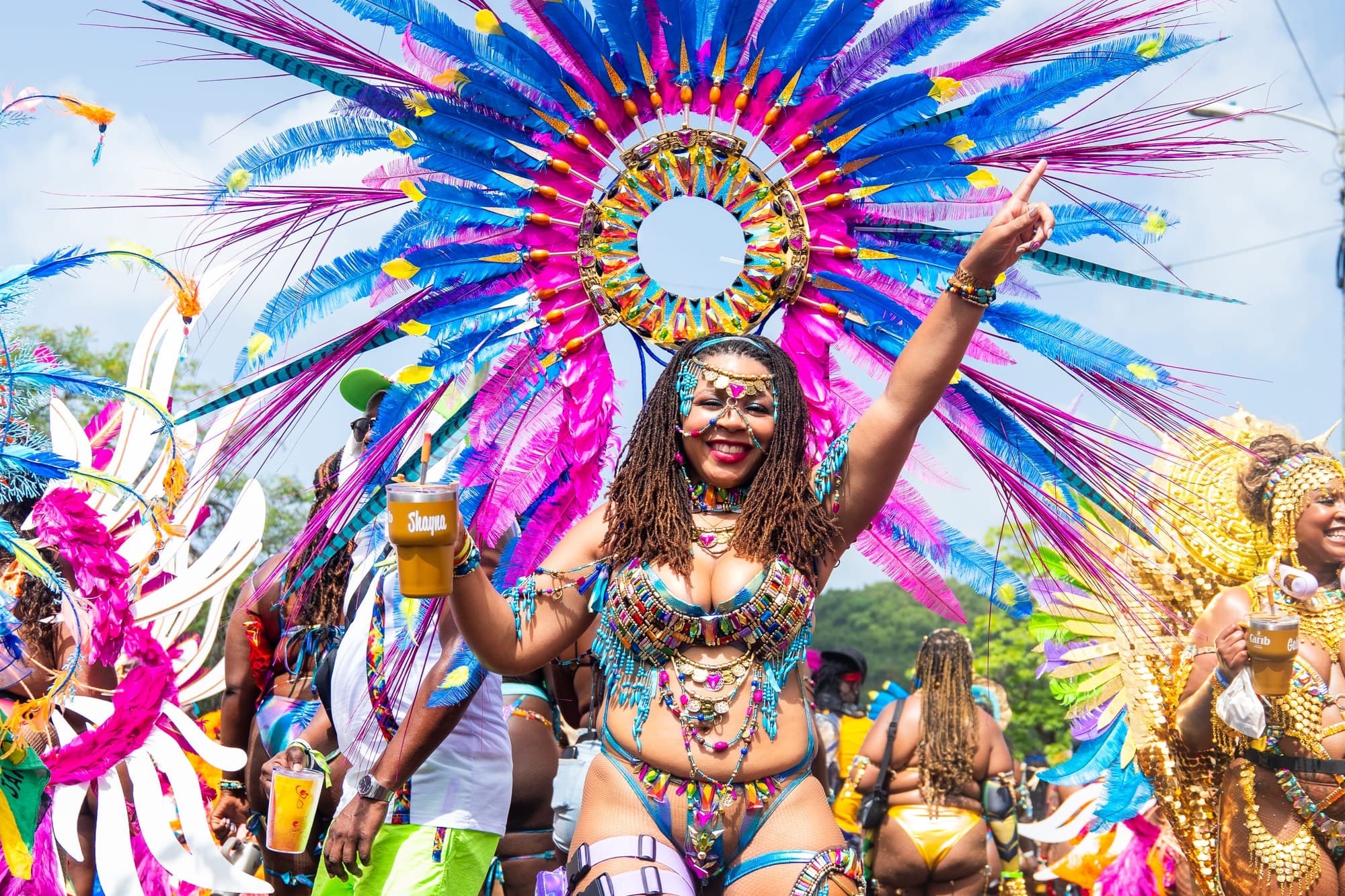
Carnival is the definition of history in motion. It is the living continuation of a story born from the history of enslavement and colonial resistance, rooted in African heritage, shaped by struggle, and transformed into one of the rawest forms of expression, freedom, and joy. Scenes from Carnival often feature some of the most beautiful and vibrant costumes and colors, traditional characters and smiles so bright that it is hard not to smile back at the images in front of you. But beyond these photos lies a story that has its roots on plantations during the days of slavery.
Today, Carnival is one of the most significant expressions of culture, traveling with its people from the Caribbean to Canada, the United States, and the United Kingdom, even finding new audiences in Malta and, more recently, returning to the motherland for Karnival Kingdom, Accra, Ghana. While carnivals across the Caribbean have influenced one another and celebrated shared heritage over the years, each one remains deeply connected to the unique history of its homeland. In the case of Grenada, the Spice Isle of the Caribbean, this history is told most powerfully by Jab Jab, a post-emancipation masquerade rooted in African resistance and self-identity.
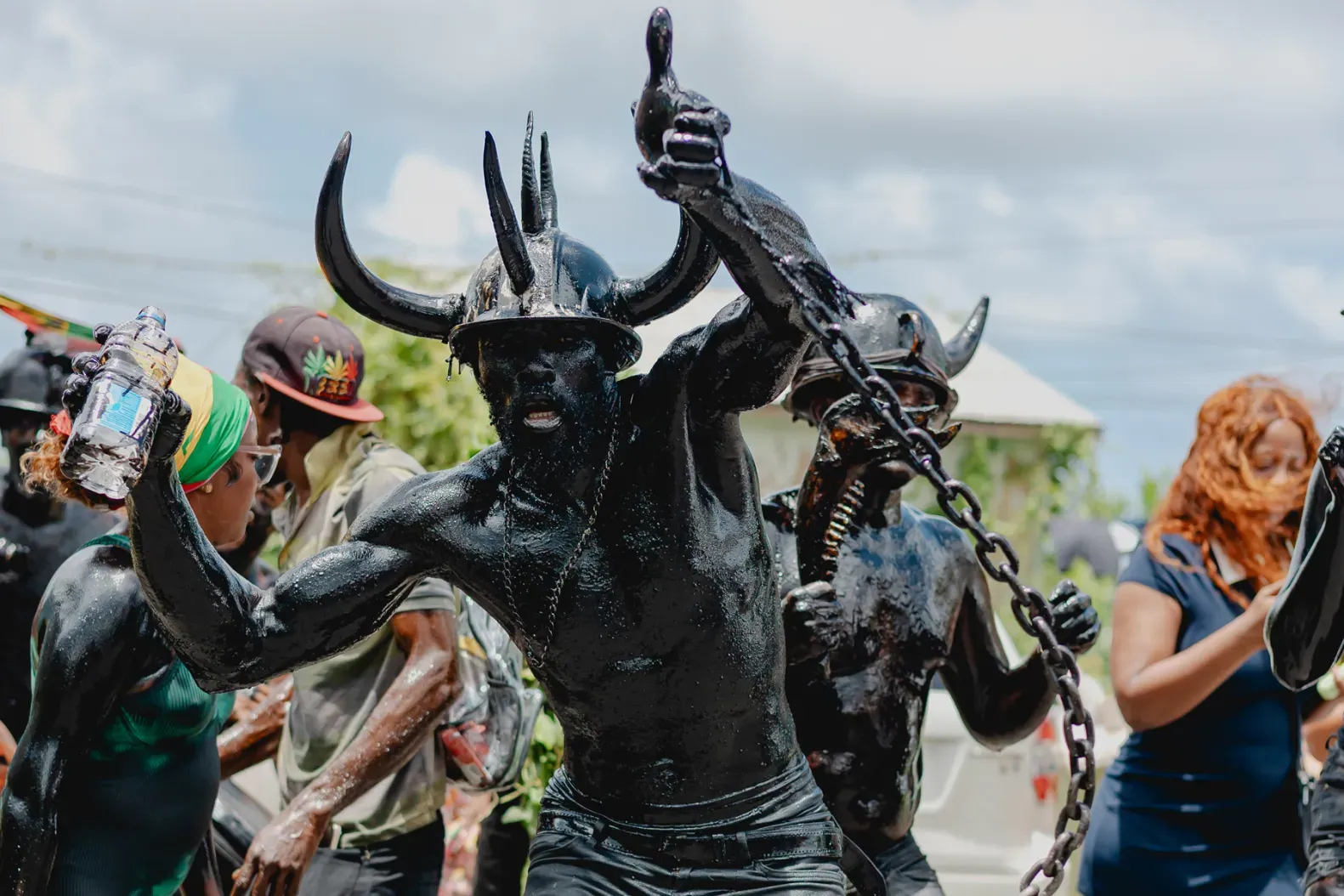
Every August, Grenada celebrates its annual Spice Mas. A quick Google search will return striking images of bodies covered in oil, with chains and other “props” that, on the surface, can be easily misunderstood or even appear intimidating. But a deeper dive on the internet, or a conversation with someone from Grenada, reveals something far more profound. What unfolds is, in fact, a story being carried forward by a people who are not only preserving it but also sharing it with, and teaching it to, visitors and younger generations alike. As Grenadian soca artist L.E.D. sings on his song Viral Again, “culturally, my island full of history.”
The term Jab, or diable in French, means devil, a derogatory label once used by slave owners to dehumanize the enslaved. Upon emancipation in the 1830s, the formerly enslaved took to the streets to celebrate their freedom by covering themselves in black. By doing this and taking on the persona of the devil, they engaged in satire, creating a rolling street theatre mocking their former masters, the entire colonial order, and the horrors of slavery. Today, thousands continue that tradition, covering themselves in black and parading through the streets of Grenada in one of the country’s greatest expressions of resistance, freedom, and heritage. “It is history, resistance, resilience, and celebration all happening at the same time,” says Grenadian singer, songwriter, producer and Cultural Ambassador Jevaughn “V’ghn” John.
“A part of the story is [to] never forget where you come from. Never forget the ones that came before us and fought for us and died for us … so that we can [now] be free and can celebrate. During that celebration we [must] celebrate them and their sacrifices as well.” – V’ghn
But Jab is not merely a costume. Every element carries meaning, and preserving the tradition in its most authentic form is essential. Jambalassee Grenada is a group that is working to do exactly that, through the documentation and preservation of Grenada’s traditional Jab Jab, with emphasis on the sound of Jab. According to Ian Charles, its founder, this work is necessary so future generations have a reference for something that they can call their own, while simultaneously learning to deconstruct the narrative of the colonizers, which runs deeper than we often appreciate.
Although today oil is commonly associated with Jab, Charles explains that its use became more prominent with the increase of cars in Grenada. As the sugar industry declined and motor vehicles became more prevalent across the island, engine oil became readily available and was gradually adopted as part of the tradition. However, the defining element of Jab was not oil, but the color black, which was achieved by using either charcoal or molasses, a by-product of burnt sugar cane. “Black is the code. Black is where the resistance is,” he says. This year, Jambalassee Grenada will be returning to the roots by offering a mixture of charcoal and molasses. “Remember your roots, remember your tradition,” Charles says, quoting MOSS International's song Jambalassee Rule, which catapulted Jab music into its own distinct music identity in 1991.
The day itself begins the night before. From the tightening of horns on helmets that would be worn on the day to repainting them and getting chains ready, little to no sleep is had as everyone prepares for the morning. Around 3am, the procession towards the city begins, with a sea of bodies covered in everything from charcoal to old engine oil and tar. These bands of people are led by individuals known as Capitals, who issue chants and spellings, a communicative call-and-response pattern that carries through the crowd. Accompanied by the sound of the conch shells, the sound of Jab is built upon the rhythm of the drums, which symbolize resistance. During slavery, drums, believed to inspire rebellion, were criminalized and banned. The enslaved would sneak away to perform rituals and find ways to preserve their African traditions, which endured, adapted, and evolved despite colonial repression. Today, the bass, the coupé, and the cutter drums each play individual rhythms that coalesce to create the trinity drum pattern that forms the soundtrack of the day.
But Jab is a multi-sensory experience that engulfs the body and spirit and goes far beyond sound alone. A number of props are commonly used during Jab, such as chains. These chains, which once shackled the ancestors, are now broken and dragged through the street in a declaration of liberation. And although there is an undeniable fear factor involved with the scene and sound of Jab, people resonate with its intensity. As V’ghn expresses, people resonate with its extreme craziness and its extreme historic vibe and energy.
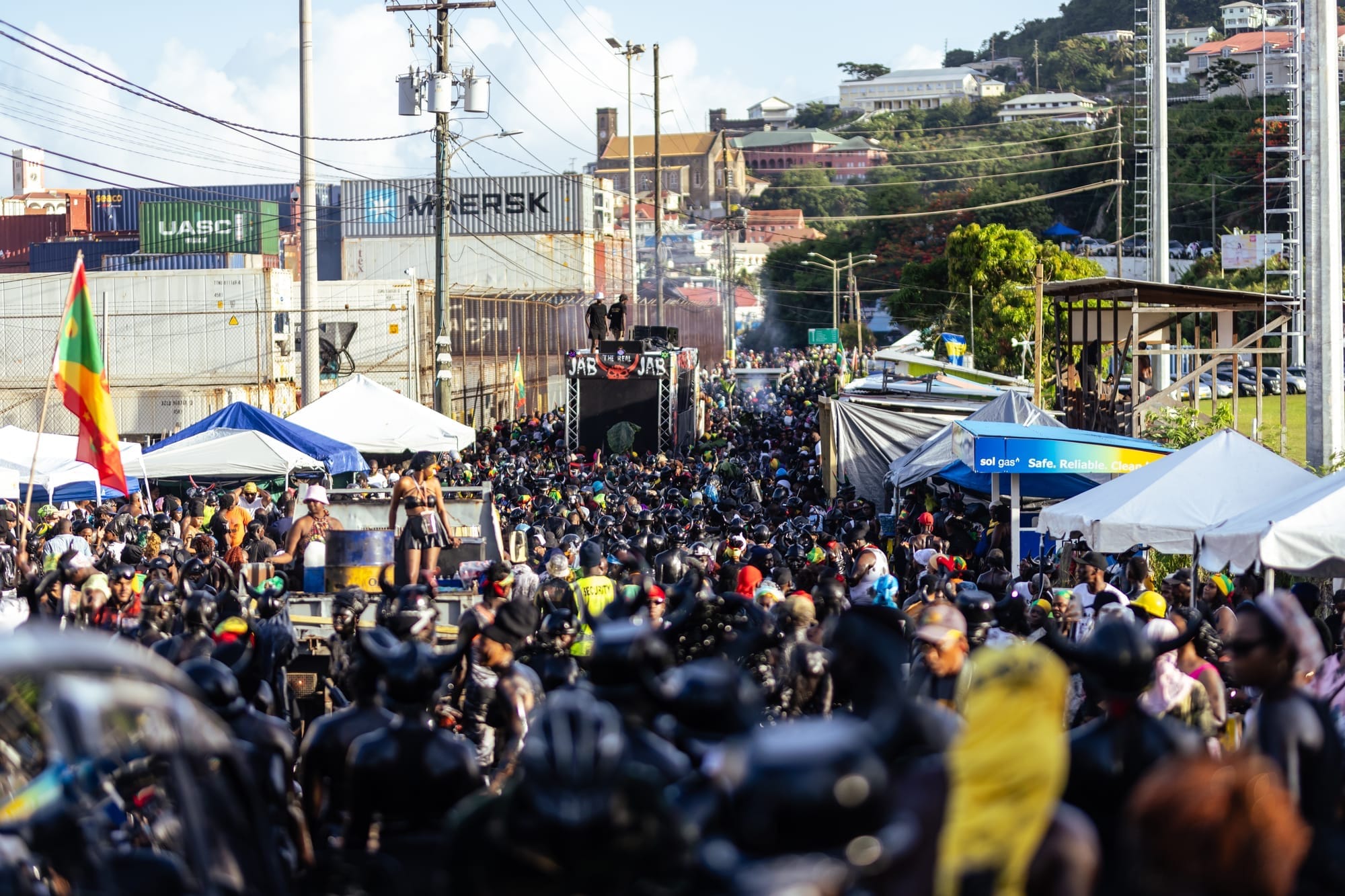
Social media, in particular, has played a major role in introducing new audiences to Grenada’s carnival. People from across the globe have been captivated, eager to learn more and experience it firsthand, making it almost impossible to find accommodation throughout the island at this time. Its music, especially, has made waves across other islands, connecting people with something that is unmistakably Grenadian.
The year 2019 marked a pivotal moment when Grenadian soca artist Mr. Killa became the first non-Trinidadian to win the International Power Soca Monarch title with his song Run Wid It, sung on a Jab Jab beat. With the added spotlight, the Jab sound exploded, entering a new era of visibility and influence, placing a greater responsibility on soca artists to present and represent the culture.
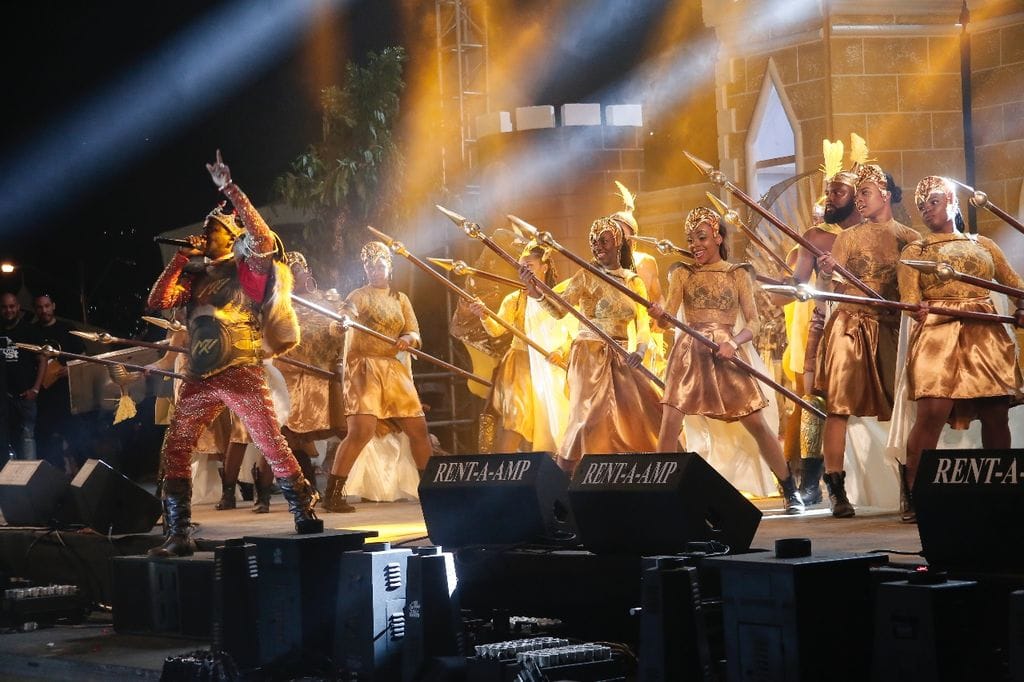
Carnival has always been more than just entertainment. It reflects a history of a people that endured and reclaimed what was once denied to them, transforming a celebration into a living archive. And as thousands take to the streets of Grenada this August, it will be another reminder to everyone that history does not live only on the pages of a textbook or on the walls of a museum. Sometimes, it literally dances to its own songs and sounds. In the case of Jab, its essence is captured perfectly in Grenadian soca artist Muddy’s song Payroll, where he sings “and still we rise, with grace and with faith in the morning in chains and oil.” It embodies the core of Jab, holding the chains of history and resilience in one hand, and those of freedom and hope in the other.
As people return to Grenada for Carnival this year, or arrive as first-timers, Charles says his greatest hope is that after the drums stop and the black washes off, people will feel one with the motherland and the wider African diaspora. As he reminds us, we are all one, separated only by displacement.